Sunflower Hearts
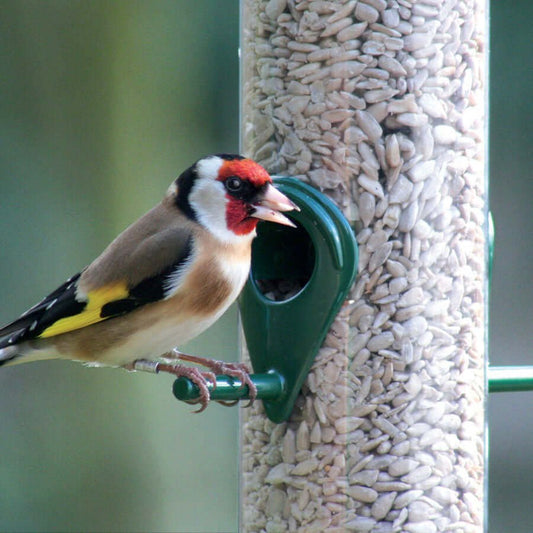
The outer husk has already been removed, leaving the kernel ready for birds to eat. A useful choice where you want less discarded sunflower husk around the feeding area.
View Sunflower Hearts →Sunflower Hearts & Seeds
Sunflower hearts, black sunflower seed and striped sunflower each offer a slightly different feeding route.
Choose husk-free sunflower hearts where you prefer less discarded sunflower husk, or offer the whole seed where birds open the husk themselves. Start with one suitable option, match it to an appropriate feeder and watch which foods your visiting birds actually use.
Quick Chooser
The outer husk has already been removed, leaving the kernel ready for birds to eat. A useful choice where you want less discarded sunflower husk around the feeding area.
View Sunflower Hearts →
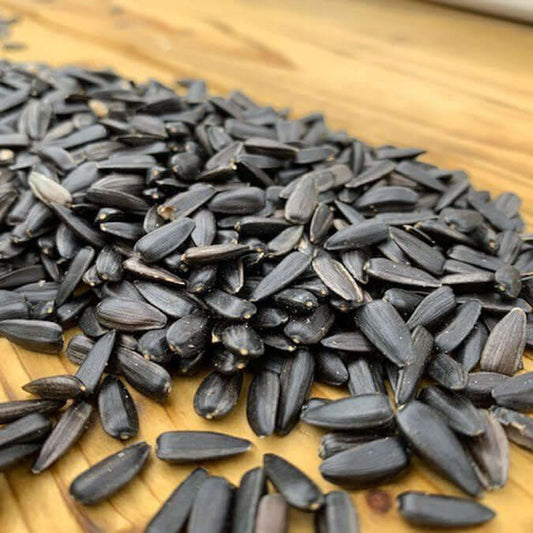
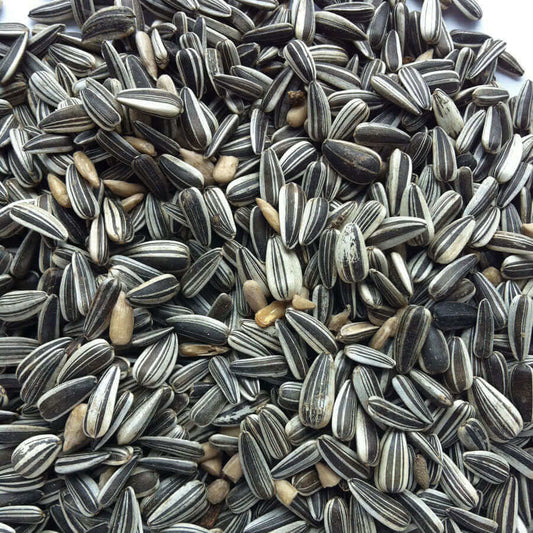
Black sunflower retains its husk. Birds taking the seed need to open it before eating the kernel, so some discarded husk around the feeding area is normal.
View Black Sunflower Seed →A smaller striped sunflower used for both garden birds and specialist cage and aviary feeding. Always check the individual product information for the birds in your care.
View Small Striped Sunflower →Hearts Vs Seeds
The main distinction is straightforward: sunflower hearts already have the outer husk removed, while whole sunflower seeds retain it.
Food & Feeder
Good feeding starts with more than choosing the food. Use feeding equipment designed to hold the food securely, make refilling straightforward and allow regular inspection and cleaning.
Haith’s dedicated Sunflower Hearts Feeder is designed for whole sunflower hearts and has a removable base to make cleaning easier.
Check the feeder description before filling. Haith’s Sunflower Hearts Feeder is intended for whole sunflower hearts and is not recommended for sunflower heart chips.
Watch Your Visitors
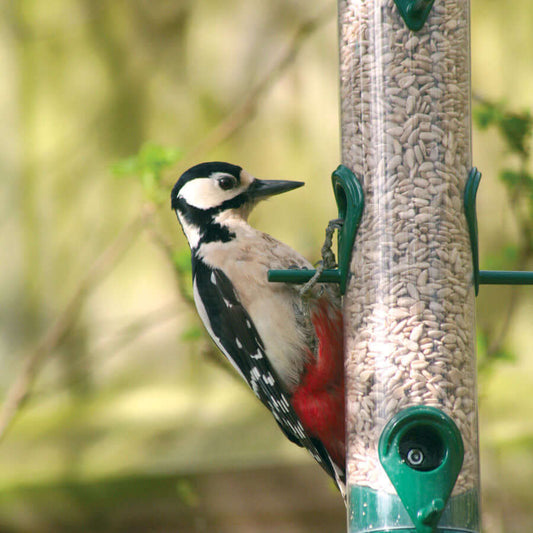
The birds using any feeding area will vary by garden, season and local population. Observe what turns up and adjust what you offer accordingly.
SuperClean™ In Action
Seed is an agricultural ingredient. Harvesting, transport and handling can leave dust, broken material and other unwanted debris mixed through it. Black sunflower gives us a very clear example of why cleaning comes first.
01
Agricultural seed can arrive carrying dust, broken husk and field material alongside the seed itself.
02
Cleaning and screening separates material that we do not want remaining in the food.
03
Cleaned and screened seed is ready to be packed or used as an ingredient in an appropriate blend.
Feed Birds Properly
Offer manageable amounts, keep food fresh and dry and remove anything that becomes damp or spoiled.
Check feeding equipment regularly, clean it when food residue, droppings or other material builds up, allow cleaned feeders to dry and provide fresh drinking water.
Want To Compare Further?
Our guide looks more closely at the practical differences between sunflower hearts and whole sunflower seed.
Read The Sunflower Guide
Explore More
Helpful Answers
Practical answers for choosing, feeding and storing sunflower food.
Sunflower hearts are the edible kernel with the outer husk already removed. Whole sunflower seeds retain the husk, so birds taking them need to open the seed before eating the kernel.
Sunflower hearts produce less discarded sunflower husk because the outer shell has already been removed. Food debris, droppings and uneaten food can still collect around any feeding point, so regular inspection and cleaning remain important.
Use a feeder suitable for sunflower hearts or an appropriate seed feeder. Always check the feeder description, particularly if you are using sunflower heart chips rather than whole hearts.
Black sunflower seed can be offered through a suitable seed feeder. Choose equipment that holds the seed securely and can be inspected, emptied and cleaned easily.
Sunflower hearts may be taken by familiar garden birds including tits, finches, sparrows, siskins and other seed-feeding visitors. The birds using your own feeder will depend on the species present locally.
Sunflower foods can form part of a year-round supplementary feeding routine. Adjust quantities to demand, keep food fresh and dry and observe how birds use the feeding area.
Keep bird food in a cool, dry place protected from moisture and contamination. Close bags or storage containers properly between uses and follow the storage information shown on the product.
You do not need to offer both. Start with the option that suits your feeder and feeding routine, then watch which foods the birds visiting your garden actually use before adding another format.